Guide · Before you drive
Driving in Morocco: what to know before you take the wheel
Driving in and around Agadir is easier than most visitors expect: the roads are good and well signed in Arabic and French. A few local habits are different from home, and knowing them makes the first day far more relaxed.
By the CarHireAgadir team in Agadir · Updated
Documents to carry
- Your driving licence. If it isn't in English or French, bring an International Driving Permit as well.
- Your passport. Police checks ask for it together with the licence.
- The rental agreement and car papers, which stay in the glovebox.
Drivers must be 21 or older. Every driver has to be named on the agreement, so add a second driver when you book if you plan to share the driving.
Speed limits and the main rules
- Towns and villages
- 60 km/h, sometimes 40
- Main roads
- 100 km/h
- Motorway
- 120 km/h
- Seat belts
- Required front and back
- Phone at the wheel
- Not allowed, hands-free only
- Alcohol
- 0.2 g per litre of blood: in practice, don't drink at all
Traffic drives on the right. Speed signs change often as you pass through villages, and the lower limit starts at the village sign even if the road looks empty.
Police checks and speed cameras
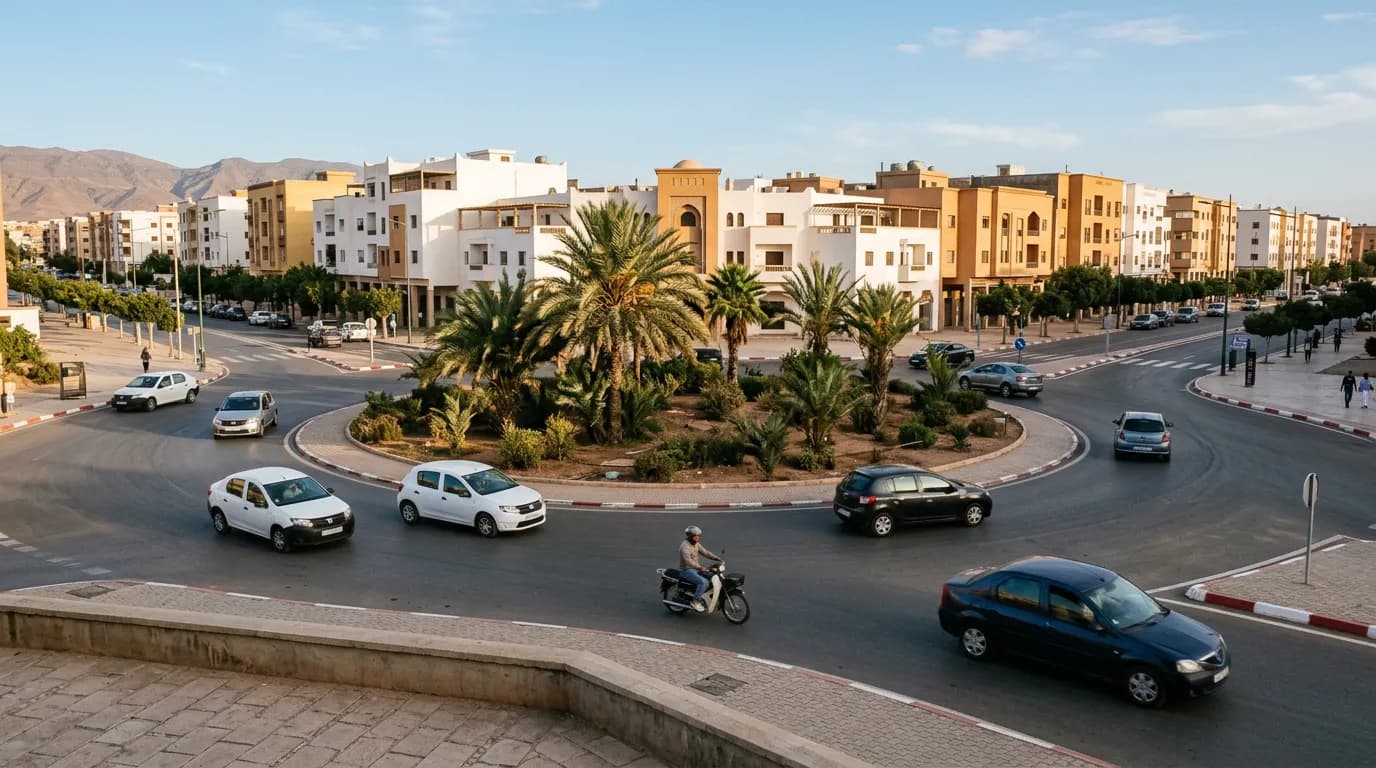
Police and Gendarmerie checkpoints are common at roundabouts and at the entrance to towns. Slow down, stop if an officer waves you in, and have your papers ready. Most checks take a minute and end with a polite "bonne route".
Speed cameras are fixed on main roads and hand-held ones are frequent near villages. Fines are usually a few hundred dirhams and can be paid on the spot; always ask for the receipt. Fines are the driver's responsibility, so keep the receipt with the car papers.
Roundabouts and priority
This is the one that surprises people. On some Moroccan roundabouts, traffic entering has priority over traffic already on it, the old French rule of priority to the right. Others work as in the rest of Europe. Look for a give way sign as you enter and, when in doubt, go slowly and make eye contact.
- Mopeds and bicycles pass on both sides: check your mirrors before turning.
- Grand taxis stop wherever a passenger waves. Leave space behind them.
- A flash of the headlights from oncoming traffic usually means "I am coming through", not "after you".
Motorway tolls and fuel
The A7 motorway links Agadir with Marrakech and the north. You take a ticket on the way in and pay at the exit. Booths take cash in dirhams, and many take cards too, but have cash ready in case. Other roads are free.
Fuel stations are frequent on main roads and in towns, and an attendant fills the car for you. Diesel is called gasoil; petrol is essence or sans plomb. Check the fuel type on the label inside the filler cap before you start. In the mountains stations are far apart, so fill up before a long climb.
Parking
In towns and at beaches, parking attendants in reflective vests watch over the cars on their stretch of street. They are part of daily life here: pay a few dirhams when you leave, a little more at night. Hotels in Agadir and on the coast usually have their own parking.
Red and white kerbs mean no parking. Don't leave bags or phones visible in the car, wherever you park.
Mountain roads and night driving
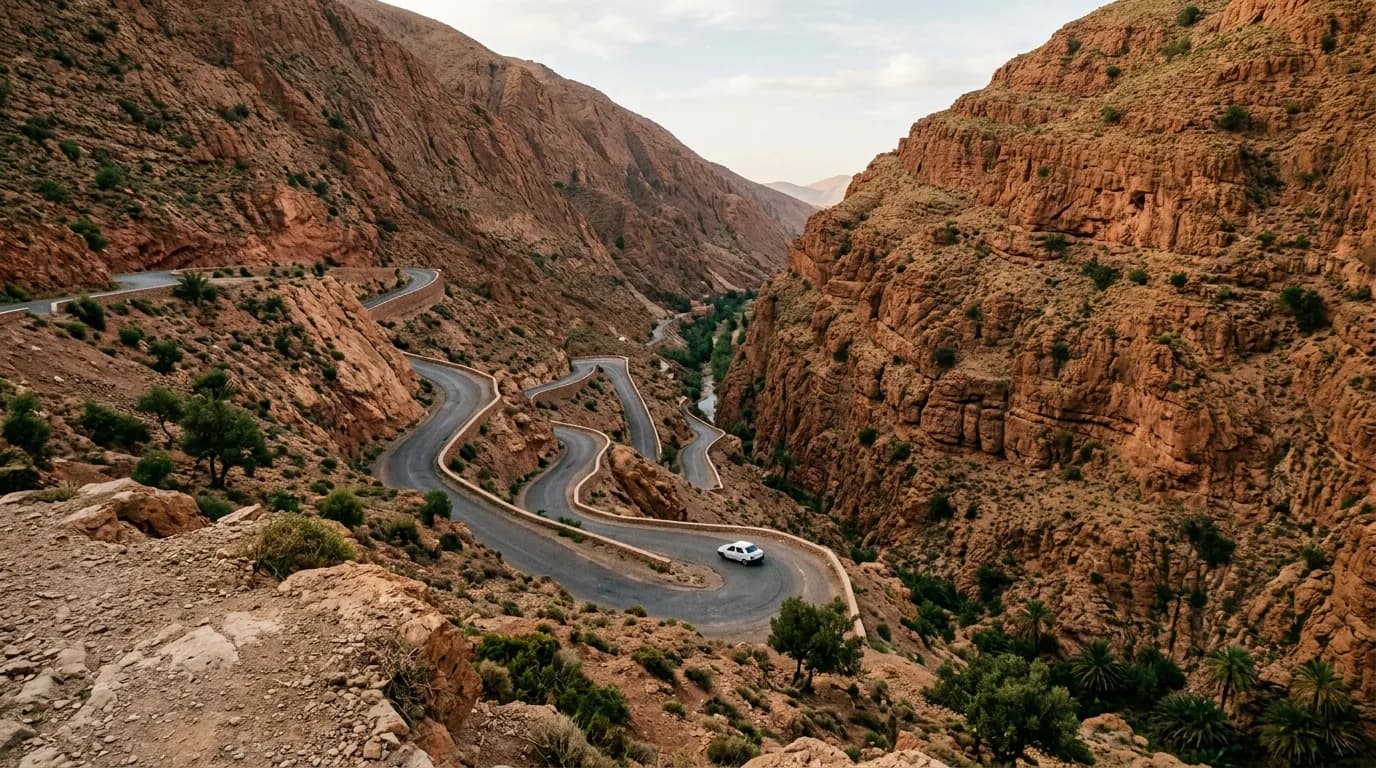
Atlas and Anti-Atlas roads are paved but slow, so plan on 40 to 50 km/h average. Outside towns there is little street lighting, and carts, animals and pedestrians are hard to see after dark. Plan long drives so that you arrive before sunset. A good first mountain drive is Paradise Valley, an hour from Agadir.
If something happens
- Police, in towns
- 19
- Gendarmerie, outside towns
- 177
- Ambulance and fire
- 15
- CarHireAgadir, 24/7
- +212 766 52 18 84
- 1
Make the scene safe
Hazard lights on, everyone out of the traffic. Call 15 if anyone is hurt.
- 2
Leave the cars where they are
Don't move the cars before the police have seen them, unless they are a danger to other traffic.
- 3
Call us
Phone or WhatsApp us straight away. We tell you what to do next and arrange help or a replacement car.
- 4
Get the police report
The report is what the insurance needs. Take photos of the cars, the road and the other driver's papers too.
Our cars come with full insurance and no deposit. If you are at fault, you pay up to the €1,000 excess. Tyres and the undercarriage are not covered. Details on our no deposit car hire page.
Questions and answers
Is it safe to drive in Morocco as a tourist?
Yes, with some care. Main roads around Agadir are in good condition. Keep to the limits, avoid long drives at night and expect the unexpected in villages.
Can I drive in Morocco with my UK or EU licence?
Yes. A licence in English or French is enough for a holiday rental. Other licences should be paired with an International Driving Permit.
Are there tolls on the way to Marrakech?
Yes, the A7 motorway is a toll road. You pay at the exit, in cash or often by card. The old mountain road through the Atlas is free but much slower.
What should I do at a police checkpoint?
Slow down, stop if you are waved in, greet the officer and show your licence, passport and the rental papers. Most checks take a minute.
Ready for the road?
Full insurance, unlimited kilometres and 24/7 help on WhatsApp. Pay at pick-up.